Posts

Our Doors are Open

Image
بِسۡمِ ٱللهِ ٱلرَّحۡمَـٰنِ ٱلرَّحِيمِ   Shaykh Abu al-Huda Muhammad ibn Ibrahim al-Ya’qubi said, with regards to the Path, “Our doors are open; some chose to watch from outside while others knocked and entered.   Some of those who entered preferred to sit at the threshold in service of the household; it did not take them long to be admitted.   Most of the visitors went in and busied themselves in looking at the beauty of house.   The first drink was offered but not of all of them took it, some felt not thirsty.   Most of the ones who tasted it never had enough of it and stopped in the corridor asking for more.   For them, it was the elixir; they, out of ecstasy, kept talking about the drink and asking for more of it until they were intoxicated and thus unable to attend the party.   They forgot that the drink was just to welcome them in and the food was to be served afterwards and greater pleasures are anticipated.   Those who went in and sat...

An Introduction to Ahadits

Image
بِسۡمِ ٱللهِ ٱلرَّحۡمَـٰنِ ٱلرَّحِيمِ The study of ahadits is one of the most extensive and excruciatingly detailed fields of study in Islam.  It emphasises greatly on verification and authenticity, and a lot of investigation has gone into the collections of ahadits that we see today.  What is generally accepted amongst the Ahl as-Sunnah wa al-Jama’ah is known as Kutub as-Sittah , the six major books of sunnah .  They are also known as Swihah as-Sittah , the “Authentic Six”.  The Kutub as-Sittah are six books containing collections of ahadits compiled by six scholars in the ninth century.  They were first formally grouped and defined by Imam Abu al-Fadhl Muhammad ibn Thahir al-Qaysarani al-Maqdisi ( r.a. ) in the 11 th Century.  Prior to his work, despite their importance, no one had undertaken such a task.  There was no way to search any of these books based on keywords or important terms.   It was due to Imam ibn al-Qaysarani’s ( r.a....

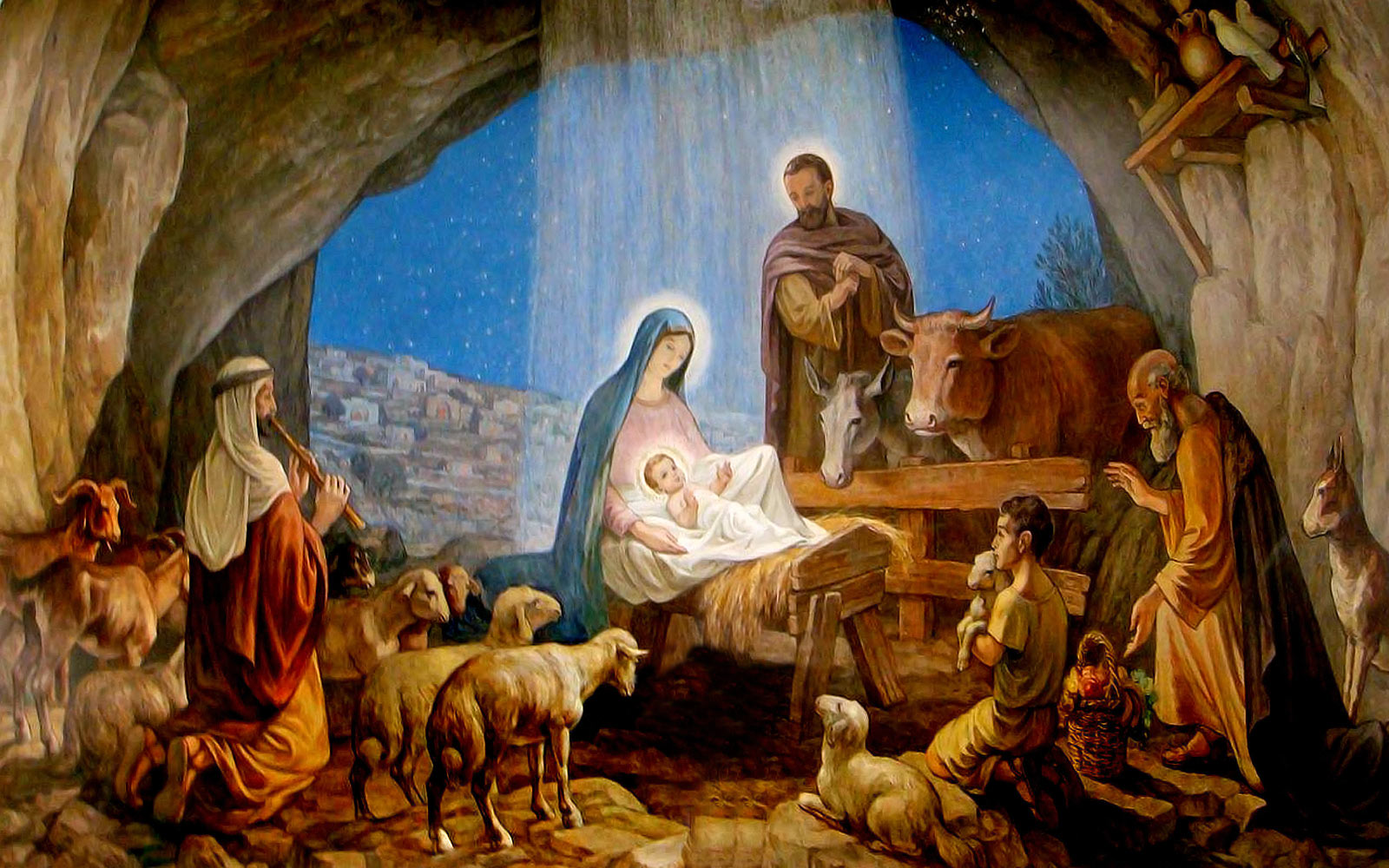
Wishing the Christians on the Birth of Jesus Christ (a.s.)

Image
بِسۡمِ ٱللهِ ٱلرَّحۡمَـٰنِ ٱلرَّحِيمِ The following is the text of Habib ‘Ali Zayn al-‘Abidin al-Jifri ( r.a. ) speaking on the permissibility of greeting the Christians.   He references a fatwa , by Shaykh ‘Abdullah ibn Mahfuzh ibn Bayyah ( r.a. ), on the permissibility of congratulating non-Muslims on their festivities.   “We are more deserving of Moses than them”: This was the response of the Prophet ( s.a.w. ) when he was told that the Jews of Madina fast on the day of ‘Ashura in celebration of Moses’ ( a.s. ) deliverance from Pharaoh and his people.   The Prophet ( s.a.w. ) used to fast this day while he was in Makkah prior to the hijrah .   He did not ask about the link between this event and its Arabic date, despite the Hebrew calendar being different to the Arabic.   Madina’s Jewish community had been naturalised in Arab lands, and thus adopted the Arabic calendar.   This was sufficient for the Prophet ( s.a.w. ) as a reason, and he did not say...

The Virgin Birth of Jesus (a.s.)

Image
بِسۡمِ ٱللهِ ٱلرَّحۡمَـٰنِ ٱلرَّحِيمِ The following is the text of a paper prepared for the Seminar for St. Andrew’s college, for Wednesday, 04 th December 2013, by Mawlana Wafi’ Muhammad.   The appearance of Prophet Jesus ( a.s. ), on the Earth, occurred in an unusual way, according to the teachings of Islam.   Jesus ( a.s. ) was the only person who was Sent to mankind without the agency of a father.   In order to fully comprehend how he came, we need to understand the events as they occurred.   It all began with a vow made by the mother of Mary ( a.s. ) concerning the dedication of her pregnancy to God.   Mary’s ( a.s. ) mother, whose name was Hannah or Anne ( r.a. ), was the wife of ‘Imran ( a.s. ), also known as Aaron, who belonged to one of the tribes of Israel.   He was from the priestly class.   Perhaps this is one of the reasons why her mother decided to dedicate her child, who was not yet born, to the service of Allah ( s.w.t. ).   S...